
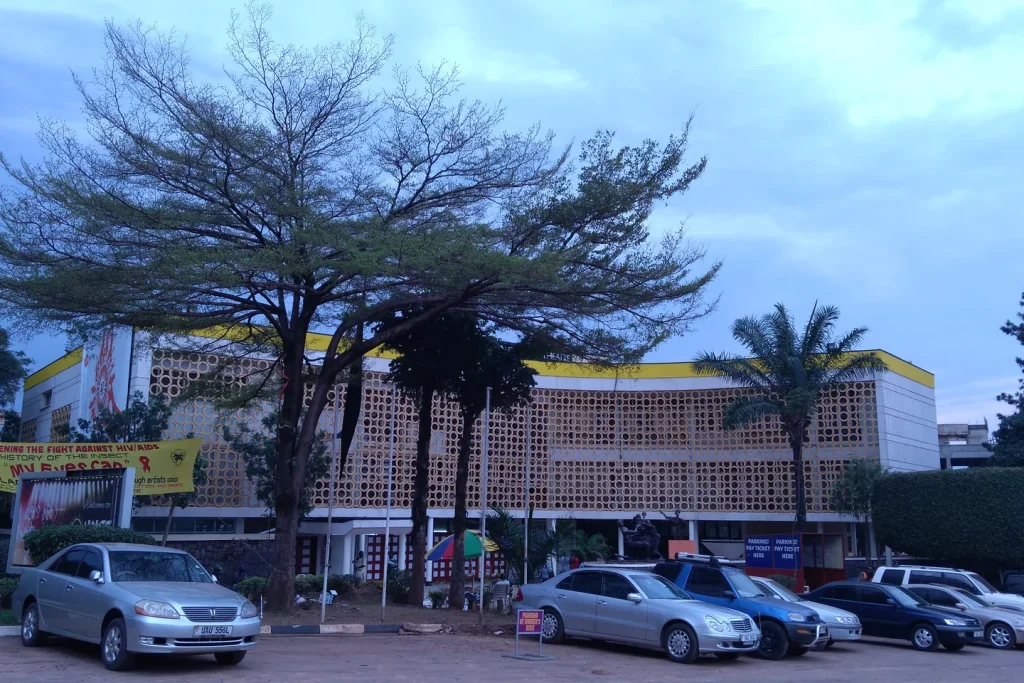

A gallery visit is easier to enjoy when it has time around it. Instead of adding art as the final item in a crowded city checklist, choose a venue because you want to look, read and ask questions. Kampala’s cultural life includes several kinds of spaces, and those differences help you build a more thoughtful day.
Afriart Gallery’s own account places its founding in Kampala in 2002 and names artist Daudi Karungi as its founder. That is a specific institution with its own programme and perspective. It should not stand in for every gallery or artist in the city, but it offers one clear place to begin learning.
Begin with the artist’s name
Read the name attached to a work before turning it into a general statement about a city or continent. Artists work with different materials, questions and experiences. A venue’s text can help you understand its framing, but you can also leave room for your own careful observation and for questions that remain open.
A past 2026 Afriart exhibition, Mona Taha’s A Walk in Makindye, is one example of a named practice engaging with everyday place. The gallery connects that body of work to walks in Makindye. The exhibition is cited here as an archival example, not as a claim that those works are currently on display.
Separate the archive from today’s programme
A gallery website may contain years of exhibitions, installation photographs and artist material. That archive can be valuable preparation, but it is different from a current visitor listing. Before travelling, check the venue’s present programme and its own directions or contact information.
Do not assume that a past exhibition photograph shows what you will find on arrival. If seeing a particular work or artist is central to your visit, confirm that expectation directly with the venue. An independent guide cannot promise access to stored work, a studio or a private appointment.
Give looking a little time
Choose a small number of works to return to within a visit. Notice scale, surface, material and the relationship between pieces. Read a label, look again and compare what the text suggests with what you can actually see. You do not need an immediate interpretation of every object.
If staff are available for questions, be specific and respectful of their time. Ask about the artist, the programme or the information already presented. Avoid expecting a person to explain an entire country’s culture through one work or one short conversation.
Keep performance venues distinct
The National Theatre photograph used with this guide is a verified Kampala exterior. It introduces a different cultural setting; it is not an image of Afriart or a reproduction of Mona Taha’s work. UNCC’s own listings also identify venues such as Nommo Gallery. Keep those names and roles separate as you plan.
A performance has its own timing, format and audience arrangements. Use the organiser’s current programme to understand what is taking place, what a ticket includes and any entry instructions. Past event pages are useful records, not current invitations.
Respect image and conversation permissions
Photographing a building does not automatically give permission to reproduce the artworks inside it. Follow the venue’s rules and ask before recording people or work. If you share a permitted image, credit the artist and venue accurately rather than using a vague caption such as “African art.”
This guide uses licensed place photography and links to the institutions’ own material. It does not claim permission to reproduce the artists’ work or to speak on their behalf.
Connect a cultural visit to the rest of your city day through a realistic arrival, a nearby pause and enough time to return. For the wider framework, continue to the neighbourhood guide.
Primary sources: Afriart Gallery’s own history, its past Mona Taha exhibition account, and UNCC’s archived Nommo Gallery listing. Check current programmes separately.